When I hired my first employee, I had no data
Some weeks ago I had lunch with the first person I ever hired.
It was casual. We were catching up, talking about life, careers, all the things that happen after “the first job”. At some point it hit me: when I hired them, I had no data. No framework. No precedent. No hiring scorecard. Just a resume, a few conversations, and a strong internal signal that this was the right person.
I was 22. It was my first job. Big institution. Serious environment. Real consequences.
Hiring someone was not symbolic. It affected budgets, team dynamics, outcomes. And yet, there was no dataset that could tell me what the correct decision was.
I still had to choose.
Looking back, that decision was made under uncertainty. Not because I was careless, but because certainty simply did not exist.
This is something we rarely admit in business
We like to tell ourselves that decisions are data driven.
With enough dashboards. Enough metrics. Enough analysis.
The “right” answer will eventually appear.
But the truth is simpler and less comfortable:
The most important decisions are almost never made with complete information. They are made when time runs out.
Uncertainty is not the exception. It is the rule
Hiring is one example. Investing is another. Strategy is full of them.
Even deciding who to sell to is a bet.
When you choose a set of accounts, you are committing:
Time
Attention
Opportunity cost
Reputation
All without knowing which ones will actually convert.
I saw the same pattern long before business
Coming from a background in math and political science, this dynamic always felt familiar.
In politics:
Polls are noisy
Advisors disagree
Context changes daily
And yet, leaders still act.
Not because they are certain, but because not acting is also a decision.
Business is not that different.
The real mistake companies make
The mistake organizations make is assuming the problem is lack of data.
It is not.
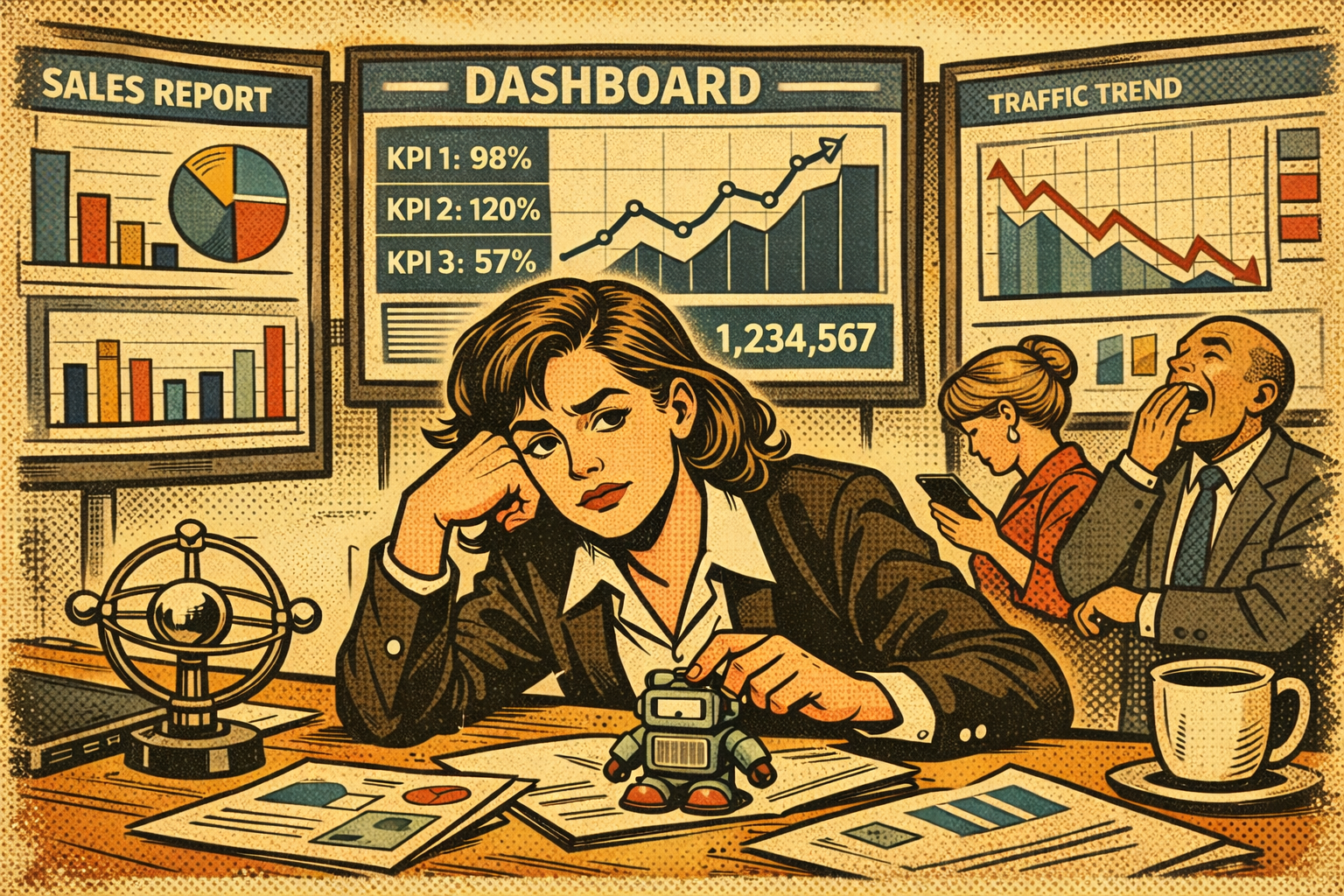
Most companies are drowning in data.
CRMs
Dashboards
Reports
Tools
What they lack is decision readiness.
Knowing when the information is sufficient to move.
When more data makes decisions worse
More data does not automatically improve decisions. In practice, it often does the opposite.
It:
Increases hesitation
Creates false precision
Delays action while competitors move
How this shows up in go to market teams
Over the past year, I have spoken with hundreds of product and GTM leaders. The symptoms vary, but the core problem is always the same.
They sound like this:
We cannot predict which accounts will close
Our quarter depends on one big deal
We spent weeks on a lead that went nowhere
A competitor won an account we did not even notice
Outbound feels noisy and ineffective
These are not automation problems. They are not scraping problems.
They are prediction problems.
Why most GTM tools fall short
Most GTM tools today optimize for activity.
More emails. More data. More dashboards.
Some add AI generated scores that look sophisticated, but collapse the moment you question them. At best, they replicate gut feeling with nicer language.
They do not make teams more decisive. They make them busier.
Decisions are driven by signals, not certainty
The reality is that decisions are driven by signals.
Weak signals
Contextual signals
Signals that only make sense when you connect them over time
Certainty never arrives. Patterns do.
What that lunch reminded me of
That lunch reminded me of something simple but uncomfortable:
Good decisions are not about being sure. They are about acting with incomplete information, consciously, and with a system that improves your odds over time.
This is the gap Intelital exists to fill
Not to give you more data. Not to automate noise.
But to help teams understand:
Which signals matter
When information is enough
Where action is justified
The default state of decision making
Whether you are:
Hiring your first employee
Choosing who to sell to
Deciding where to place your next bet
Uncertainty is not a bug of decision making.
It is the default.