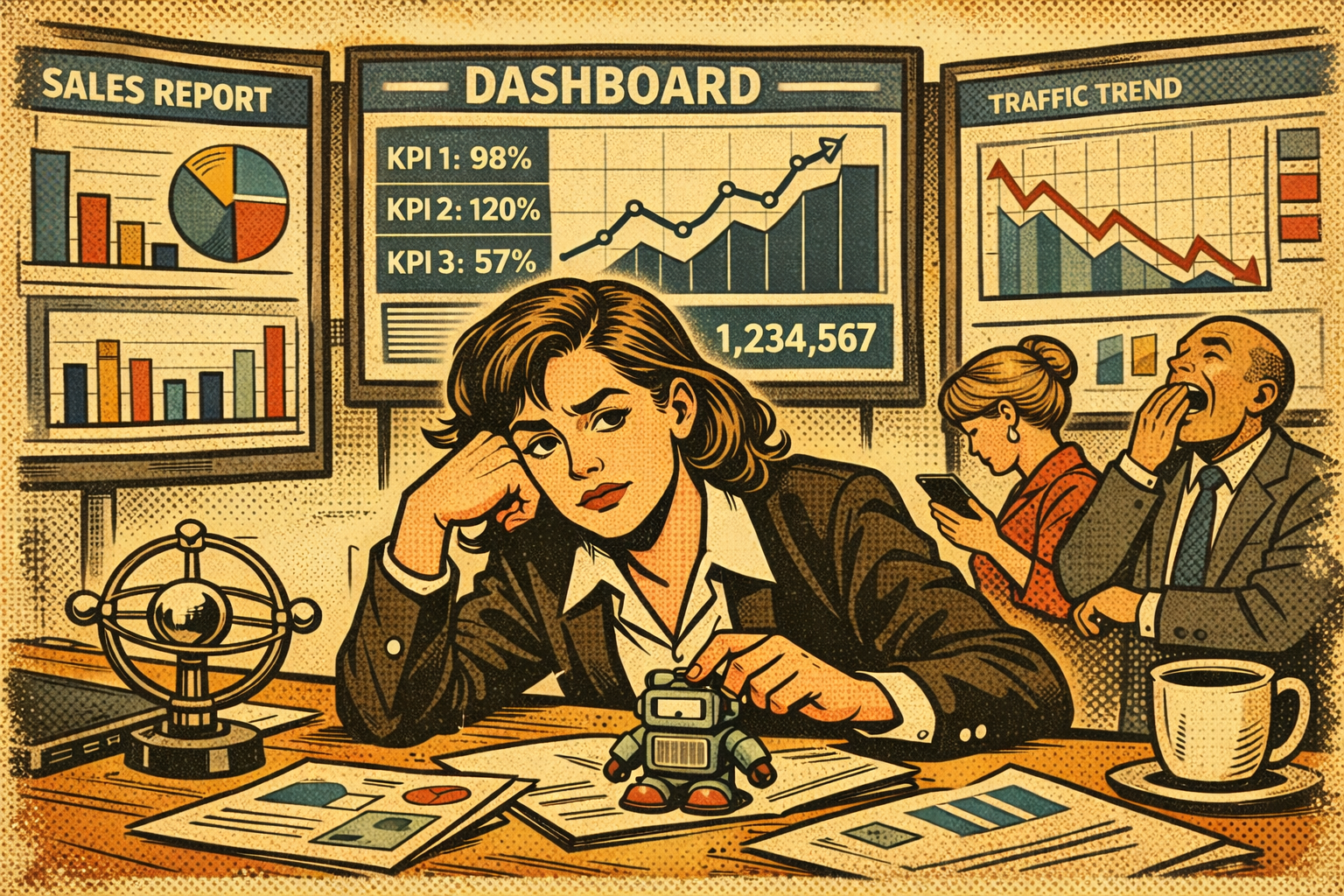
Most companies think they analyze markets. They actually collect data, build slides, and discuss trends. This is just confirmation with extra steps.
I think confirmation bias is not stubborn leadership. It is not ego. It is pattern completion. That is exactly what our brains expect. I first understood this reading Gilovich in college: the brain completes patterns before it questions them.
The brain expects continuity. It looks for evidence that the next quarter will resemble the last, that competitors will behave predictably, that customer signals mean what they meant before.
In market analysis, this shows up as selective benchmarking.
The data exists. It just never makes the slide
A SaaS company reviews competitive pricing, then they notice three competitors raised prices last quarter, and they end up interpreting this as market validation for their own increase. They do not mention the four competitors who held steady or the two who quietly launched lower-tier plans. This is not dishonesty. It is compression. The brain discards contradictory signals to build a clean narrative. The issue is that the narrative enters the pipeline review as fact.
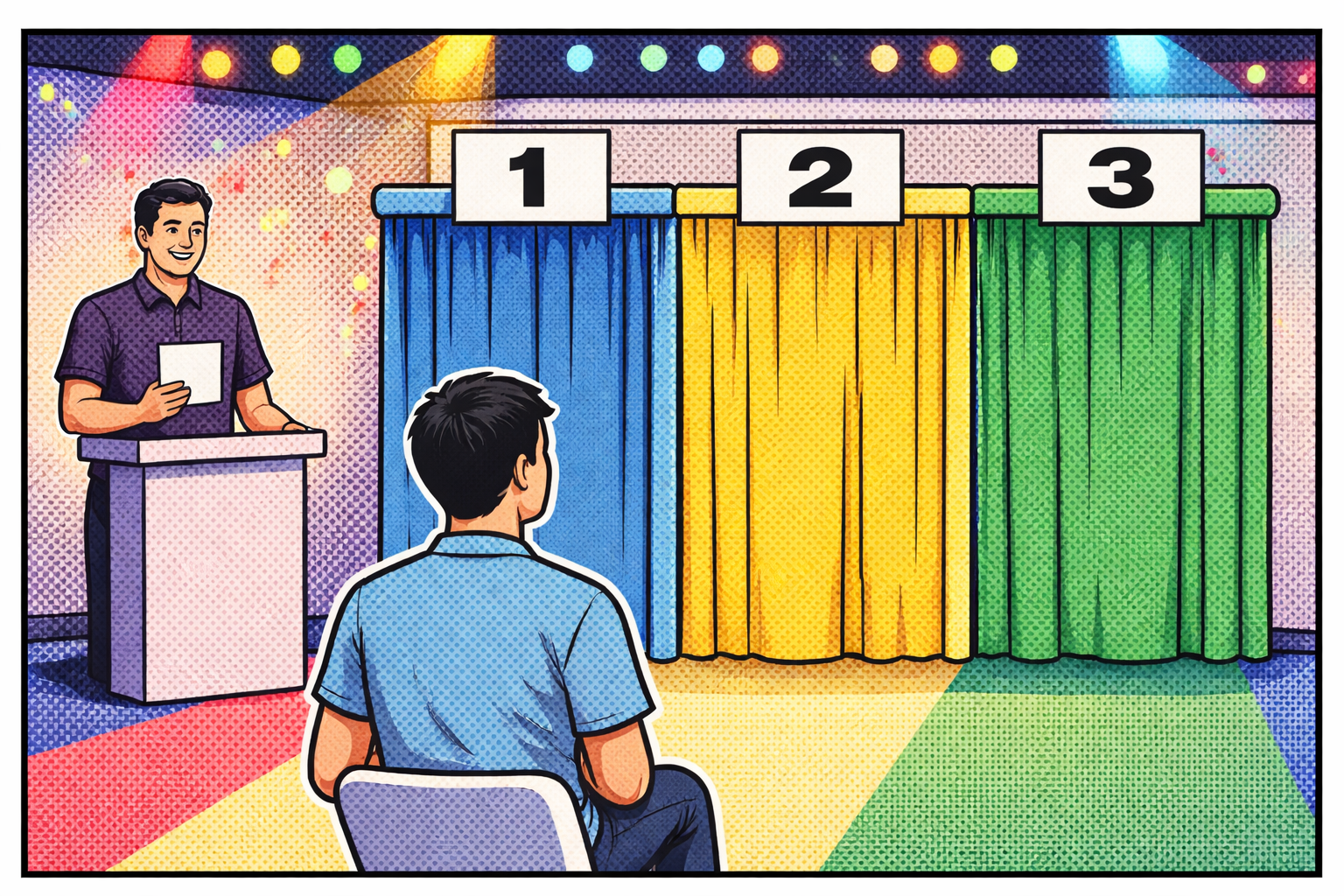
Market analysis fails at the input stage
I have seen first hand how market analysis fails at the input stage. Most teams start with a hypothesis: "enterprise is ready for this feature", "mid-market churn is pricing-driven", "outbound is softening". Then they gather data, but the hypothesis determines what counts as signal.
This happened to me building this company: after reading 'The Mom Test' I did more than 150 interviews and still I thought the answer was that my initial hypothesis was true, but once the algorithms showed me the truth I had to go with it.
If you believe enterprise wants deeper integration, you will notice integration requests in sales calls, you will weight them heavily in your feature prioritization matrix, you will not notice that those requests came from three accounts in the same vertical. Even worse, you won't see that deal velocity did not improve after the last integration shipped.
The system does not stop you. CRMs do not flag sampling bias. Slide decks do not auto-generate counterfactuals.
Forecasting is where this compounds
A VP of Sales reviews pipeline coverage. They see strong activity in two segments. Deals are moving. Conversations are accelerating. They adjust the forecast upward.
What she does not see: those segments always show early activity. Historically, they stall at legal review. The pattern has repeated for six quarters, but the forecast model does not surface that. It weighs recent activity more than historical conversion.
The architecture quietly penalizes memory.
Contradictory data slows momentum. Momentum wins most rooms.
So teams develop interpretive shortcuts: "that competitor's pricing is not comparable, they are targeting a different segment", "those churn accounts were poor fits from the start", "outbound is not softening. We are refining ICP".
Each explanation is plausible. Individually, they may be true.
Collectively, they form a pattern: data that contradicts strategy gets reframed until it supports it.
Boards do not ignore data. They reinterpret it
A company misses its Q2 target, the CEO presents revised assumptions for Q3, the board asks clarifying questions, they pressure-test the new forecast. However, they do not revisit Q1.
Q1 beat expectations. It validated the year's strategy. No one questions whether that beat was signal or variance. The confirmation sits in the foundation and the rest of the year builds on it. This is decision coupling: a strong quarter becomes evidence of strategic correctness. Subsequent quarters get explained as execution issues or market timing.
The architecture does not allow strategy to fail. Only tactics. When results disappoint, execution changes. When results impress, strategy hardens.
TAM discussions are almost entirely confirmation bias
A founder estimates market size by surveying adjacent categories. They assume their product will capture 10% of that adjacent spend.
The board asks: "Why 10%?"
The answer is always some version of: "Conservative estimate based on comparable adoption curves."
What no one asks: which non-customers are you excluding? What assumptions are baked into that adjacency?
TAM models do not start with the market. They start with the desired outcome and work backward.
By the time the number reaches the slide, it has been shaped to justify the round.
The fix is not better data
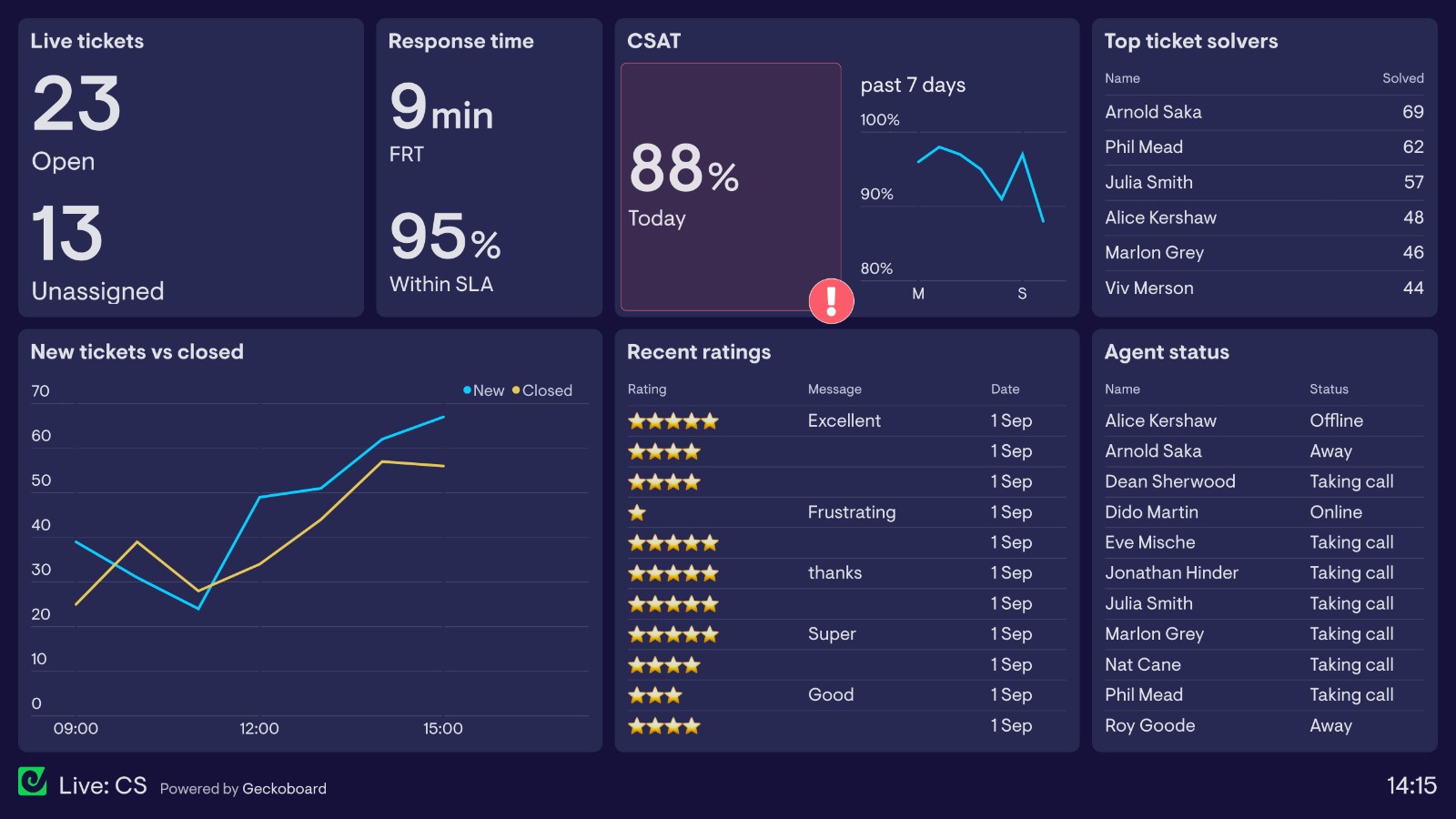
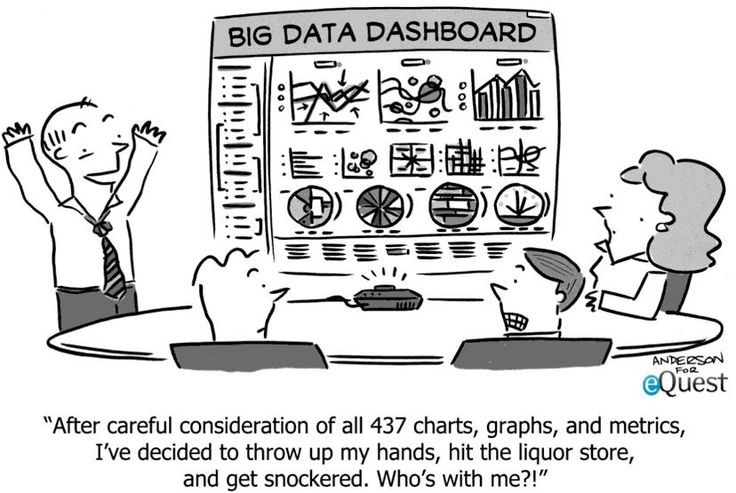
More dashboards do not reduce bias. They encode it at scale.
If your CRM scores leads by recent activity, every rep will optimize for recent activity. If your board deck highlights wins in a specific vertical, every strategy conversation will center that vertical.
The system teaches what to see.
The fix is dissent design
Bias does not disappear with more data. It disappears when contradiction has power.
Who in the room benefits from proving the strategy wrong? Not who is allowed to question it. Who is rewarded for it.
Most organizations say they value debate. What they reward is speed and conviction. Real dissent slows momentum. It forces models to be reopened. It delays forecasts. It introduces doubt into rooms optimized for confidence.
So dissent is not suppressed. It is made inefficient. Over time, people learn what is costly to surface. Confirmation bias is not a cognitive glitch, it is an incentive pattern. It lives between the dashboard and the decision. In the fields your CRM does not track. In the historical comparisons your forecast does not surface. In the quarter that beat expectations and quietly defined what “good” looks like.
The problem is not that teams see what they want to see, it is that systems decide what is easy to see.